Esports is professional competitive gaming on a global scale. This guide breaks down the tournaments, major games, and the path players take from casual gaming to championship glory.
You've probably heard the buzz about esports and wondered what all the fuss is about. Let's be real—it's competitive gaming, but on a scale that's genuinely hard to grasp until you experience it firsthand. We're talking about professional athletes whose arena is a digital battlefield and whose sport is a video game. The entire ecosystem revolves around esports tournaments, the Super Bowls and World Series of this digital world. This is where legends are forged, incredible stories unfold, and yes, where life-changing amounts of money are won.
### What Exactly Is Esports?
I get it. The term 'esports' can sound a bit corporate and overused. Strip that away, and at its heart, it's organized, professional video game competition. It's not just you and your friends arguing over who's better on the couch (though that's where the passion often starts). This is a structured sport with coaches, analysts, rigorous practice schedules, and massive global audiences watching live on platforms like Twitch.
Think of it like any traditional sport. There are regular season matches—often called leagues or circuits—that build toward the main event: the tournament. These tournaments are the absolute pinnacle, where everything culminates. The pressure is immense, the production is spectacular (think packed stadiums and million-dollar stage designs), and the stakes are genuinely life-altering for the players. The atmosphere is electric, a pure celebration of skill, strategy, and those unforgettable clutch moments people talk about for years.

### The Games That Define the Scene
So, what games are we actually talking about? The landscape evolves, but several titans have defined the competitive scene.
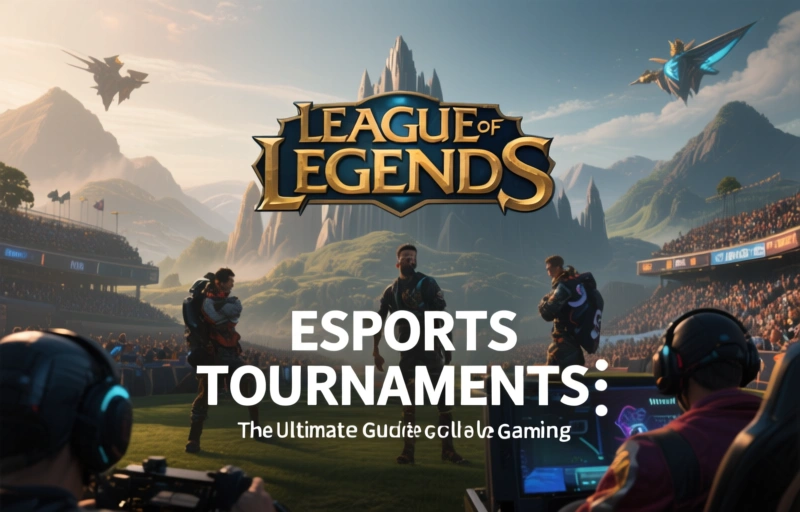
- **League of Legends:** Home to the massive World Championship, a global spectacle.
- **Counter-Strike 2:** Known for its prestigious Major tournaments.
- **Dota 2:** Features 'The International,' a tournament with prize pools funded by the community that can exceed $40 million, dwarfing many traditional sports payouts.
- **Valorant & Overwatch:** These have carved out huge spaces with their own franchised leagues and dedicated followings.
These are the giants—the games where professional careers are built and legacies are cemented. The skill ceiling is incredibly high, requiring not just fast reflexes but deep strategic thinking and flawless teamwork.
### The Path From Casual to Champion
The journey from a casual player to a tournament champion isn't always a straight line. For most pros, it starts small, right from their bedroom. Online platforms are the new local courts, the digital equivalent of pickup basketball. You grind, improve, find a team, and start climbing the ranks.
This ecosystem is powered by a network of tournament organizers. Some, like ESL or BLAST, are massive companies running the premier events broadcast globally. Others are community-focused, running local scenes that are the true lifeblood of the sport. They handle all the logistics: brackets, rules, servers, and prize distribution.
Finding a tournament to join in 2025 or beyond is easier than ever—the calendar is always packed. The structure itself will feel familiar:
1. **Group Stage:** Teams or players are seeded into initial pools.
2. **Double-Elimination Bracket:** A popular format where a loss sends you to a 'losers bracket' for a second chance—it's brutal but fair.
3. **Playoffs & Grand Final:** The nail-biting climax where everything is on the line.
For viewers, the entire tournament is a compelling narrative. We follow underdog stories, historic rivalries, and players battling not just their opponents, but their own nerves under the spotlight. It's human drama played out at a dizzying speed.
One of the most remarkable things is the sheer accessibility. You can watch the best in the world compete from anywhere, for free. And if you're inspired to compete? Your first amateur tournament might be just a few clicks away. The barrier to entry is low, but the climb to the top is a mountain—and that's what makes the stories so incredible.
As esports continues to explode into a mainstream phenomenon, the infrastructure supporting competitive gaming has become just as crucial as the players themselves. From grassroots local LAN parties to massive international spectacles like The International or the League of Legends World Championship, the ecosystem relies on reliable data, accurate rankings, and transparent tournament structures. One of the biggest challenges for up-and-coming teams and organizers is navigating the murky waters of sponsorship deals, prize pool verification, and player performance analytics. This is where platforms dedicated to competitive integrity step in. For example, if you are a tournament organizer looking to validate team standings or a player wanting to check the historical performance data of a potential opponent, utilizing a trusted ranking system is essential. A resource like
Bnbrank helps bridge that gap by offering transparent metrics and community-driven insights that can level the playing field for smaller contenders. Instead of relying solely on gut feelings or outdated leaderboards, savvy competitors use such tools to scout talent and identify emerging strategies. Furthermore, as the esports industry matures, the demand for verified statistics and fair ranking algorithms will only grow, making platforms that prioritize data accuracy a vital part of any serious gamer’s toolkit. Whether you are grinding through online qualifiers or scouting for a new team member, having access to clear, reliable data can give you a decisive edge in the hyper-competitive world of digital sports.
As esports tournaments continue to evolve, players are constantly seeking ways to gain a competitive edge, whether through advanced training regimens, optimized hardware, or strategic financial planning. One often overlooked aspect of professional gaming is the importance of managing your in-game resources and real-world rewards effectively. For instance, many platforms now offer incentives to attract new competitors, such as the
Mercury sign up bonus, which can provide additional funds or in-game currency to help you enter more tournaments or upgrade your gear without dipping into your savings. This is particularly valuable for up-and-coming players who need to balance practice time with budget constraints. By taking advantage of such offers, you can focus on honing your reflexes and map awareness rather than worrying about entry fees. Additionally, savvy gamers often combine these bonuses with other loyalty programs to maximize their returns, allowing them to participate in high-stakes events like the Intel Extreme Masters or The International without financial strain. Remember, in the fast-paced world of esports, every advantage counts—from mastering a new meta to securing a welcome boost that keeps your competitive journey sustainable. Whether you’re grinding ranked matches or scrimmaging with a team, integrating smart financial moves into your gaming routine can set you apart from the crowd.