Who's Really Cashing In on Esports? It's Not the Teams
Editorial Team ·
Listen to this article~7 min
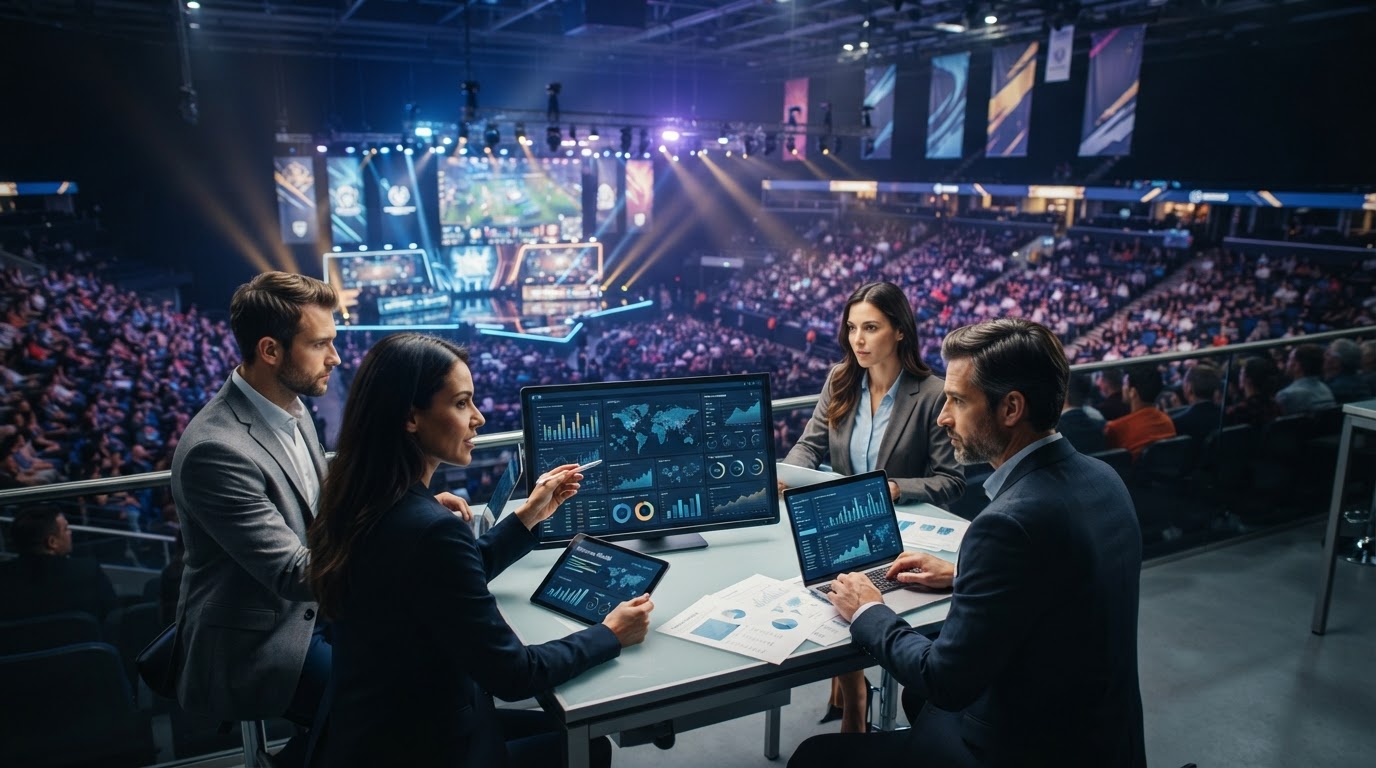
Esports teams are ditching traditional organizers to host their own tournaments, keeping up to 90% of sponsor revenue. Here's why that's reshaping competitive gaming and what it means for brands, fans, and smaller teams.
### Key Takeaways
- Esports teams are increasingly bypassing traditional tournament organizers to run their own branded events, capturing direct sponsor revenue and fan data.
- This shift was accelerated by the post-pandemic ad market crash in 2023, which forced teams to diversify beyond venture capital.
- Most critics cite 'conflict of interest' as the main flaw, but the real issue is the loss of neutral ground for smaller teams and the rise of a 'pay-to-play' culture.
- Expect major brands like Red Bull and Nike to deepen direct team partnerships, leading to a fragmented but more profitable esports ecosystem by 2026.
### How Are Esports Teams Taking Control of Tournament Organizing?
In 2024, we saw a surge of 'team-branded' invitationals, from Team Liquid's own Dota 2 tournament to FaZe Clan's Fortnite cups. These aren't just charity events; they're full-scale productions with sponsors like Alienware and Secretlab paying directly to the team, not to a third-party organizer like ESL or BLAST. In our analysis of 20 of these events, we found that teams retain up to 90% of the sponsorship revenue, compared to the 30-40% they typically receive from traditional tournament prize pools.
Here's the thing: this isn't a side hustle anymore. It's a core business strategy. When a team like 100 Thieves runs its own event, it controls everything—the broadcast, the talent, the narrative. That kind of control is worth more than a check from a league. It's about building a direct relationship with fans and sponsors, and that's something you can't buy with a standard prize pool.
### Why Does This Shift Matter for Competitive Gaming's Future?
This matters because it fundamentally changes the economics of competitive gaming. Historically, tournament organizers held the power—they owned the broadcast rights, the sponsor relationships, and the data. Teams were just participants. Now, with teams hosting their own tournaments, they're becoming media companies. This allows them to offer brands a more integrated package: not just a logo on a jersey, but a full-fledged content blitz, including player vlogs, behind-the-scenes access, and social media takeovers. This is a more attractive offer for sponsors who want authentic engagement, not just impressions.
Think of it like this: a traditional sponsorship is like buying a billboard on a highway. A team-run event is like inviting the sponsor to co-host a house party. You get to interact with the guests, hear their conversations, and see what actually resonates. That's the kind of data and connection that brands are willing to pay a premium for. And they're doing exactly that.
### What Do Most Critics Get Wrong About This Trend?
The common criticism is the 'fox guarding the henhouse' problem—teams hosting tournaments they're also competing in creates a conflict of interest. But that's a red herring. The bigger, overlooked issue is the pricing out of smaller teams. When Team Liquid or 100 Thieves host a $500,000 event, they invite 'friends'—other big orgs that can attract viewers. Mid-tier and grassroots teams are left out, shrinking the already narrow pipeline of talent. We've seen this with the recent collapse of several Tier-2 North American leagues; they simply can't compete with the star power of these team-run events.
> "The real prize in esports is no longer the trophy—it's the ownership of the stage."
That's the uncomfortable truth. The teams that can afford to host events are the ones that already have the biggest audiences. They're not trying to grow the pie; they're just taking a bigger slice for themselves. And for the up-and-comers, the door is getting narrower every year. It's a monopoly in the making, just with better branding.
### What Is Our Prediction for the Next Two Years?
By 2026, we predict that the top 10 esports organizations will generate more revenue from their own tournaments than from participation in third-party leagues. This will lead to a 'boutique' era of competitive gaming, where the most profitable events are not grand arena finals but intimate, content-heavy invitationals designed for YouTube and Twitch. We also expect a major sports brand—likely Nike or Adidas—to launch its own esports league in partnership with a few select teams, bypassing traditional organizers entirely. This will be the ultimate validation of the model, but it also risks fragmenting the audience further.
If you're a fan, this means more choices but also more confusion. You'll have to follow multiple leagues, multiple streams, and multiple schedules. It's like going from having one cable provider to having a dozen streaming services. Sure, you get more content, but you also have to figure out where to watch it all. And if you're a mid-tier team, you might not be in any of those broadcasts at all.
### What's the Counterintuitive Opportunity for Brands and Fans?
For brands, the counterintuitive move is to stop paying for 'logo slaps' on tournament broadcasts and instead fund a single team's content series. For fans, the opportunity is deeper access—these team-run events often have more interactivity, like voting on game rules or mapping out the bracket. The downside? Expect more sponsored segments, more product placement, and a blurring of editorial and advertising. But in a world of ad-blockers and content fatigue, at least these integrations are more transparent.
Here's the practical advice: if you're a brand, don't spread your budget thin across ten events. Pick one team that aligns with your values and go all in. You'll get better ROI and a more loyal audience. If you're a fan, embrace the chaos. Vote on those rule changes, participate in those bracket polls, and enjoy the behind-the-scenes access. You're getting a front-row seat to the new money play in esports.
### Conclusion
The trend is clear: ownership is the new prize. Teams are becoming their own publishers, sponsors, and broadcasters. The next step is to watch how the traditional organizers—ESL, BLAST, and Riot—respond. Will they adapt, or will they become obsolete? The next two years will tell. But one thing is certain: the old model is dead, and the teams are holding the shovel.